The United States struggle to separate from England ended with the signing of the Treaty of Paris on September 3, 1783.
Following the signing of the treaty of Paris, the Constitution was written and ratified and the first official act of the US Congress was to set up the Judiciary which they did with the Judiciary Act 1789. Following the Judiciary Act of 1789, Congress had to create some crimes, because there would be no reason to have a Judiciary branch of government unless there were some crimes. The first federal criminal code for crimes was the Criminal Act of 1790 which had twenty three crimes and penalties for those crimes. Seven of the twenty three criminal offenses were capital crimes which entailed the death penalty by hanging. Remember this is the age of sail, and any cargo or persons that moved in large numbers traveled by boat for the railroad in the form of steam engines had not been invented yet. Cars and airplanes were a long way off. It was truly a global economy during the early years of the United States. Of the seven capital crimes, piracy or crimes on the high seas resulted in the death penalty which meant hanging. The crime of piracy was defined in the US Constitution as well.
The signers Of the US Constitution had realized that the importation of slaves was going to be a future problem, but they prohibited the government from passing laws against the importation until 1808 ( US Constitution Article 1 section 9). They gave those invovled in the slave trade a time to adjust. During the presidency of Thomas Jefferson legislation was crafted by southern statesmen and northern statesmen to prohibit the importing of slaves from Africa. The Act Prohibiting Importation of Slaves of 1807 would take effect on January 1st 1808. The problem was that the margins were so high (profit) in the smuggling of Africans the act had little effect. For example, in today's dollars one could purchase a slave in Africa for $1,000 dollars and resale the slave for $50,000 dollars in the Americas. In 1818 congress passed legislation to make it easier to prosecute slave traders. Finally, the United States took solid ground Congress crafted , by unanimous consent, and President James Monroe signed the Piracy Act of 1820 which remains on the books of the Federal criminal code to this very day.
Thus, the United States would longer tolerate the trafficking of slaves anywhere in the world by any US citizen or US registered vessel.
Under this 1820 Piracy Act Nathanial Gordon from Portsmouth, Maine a slave trading ship Captain of the New York registered ship the
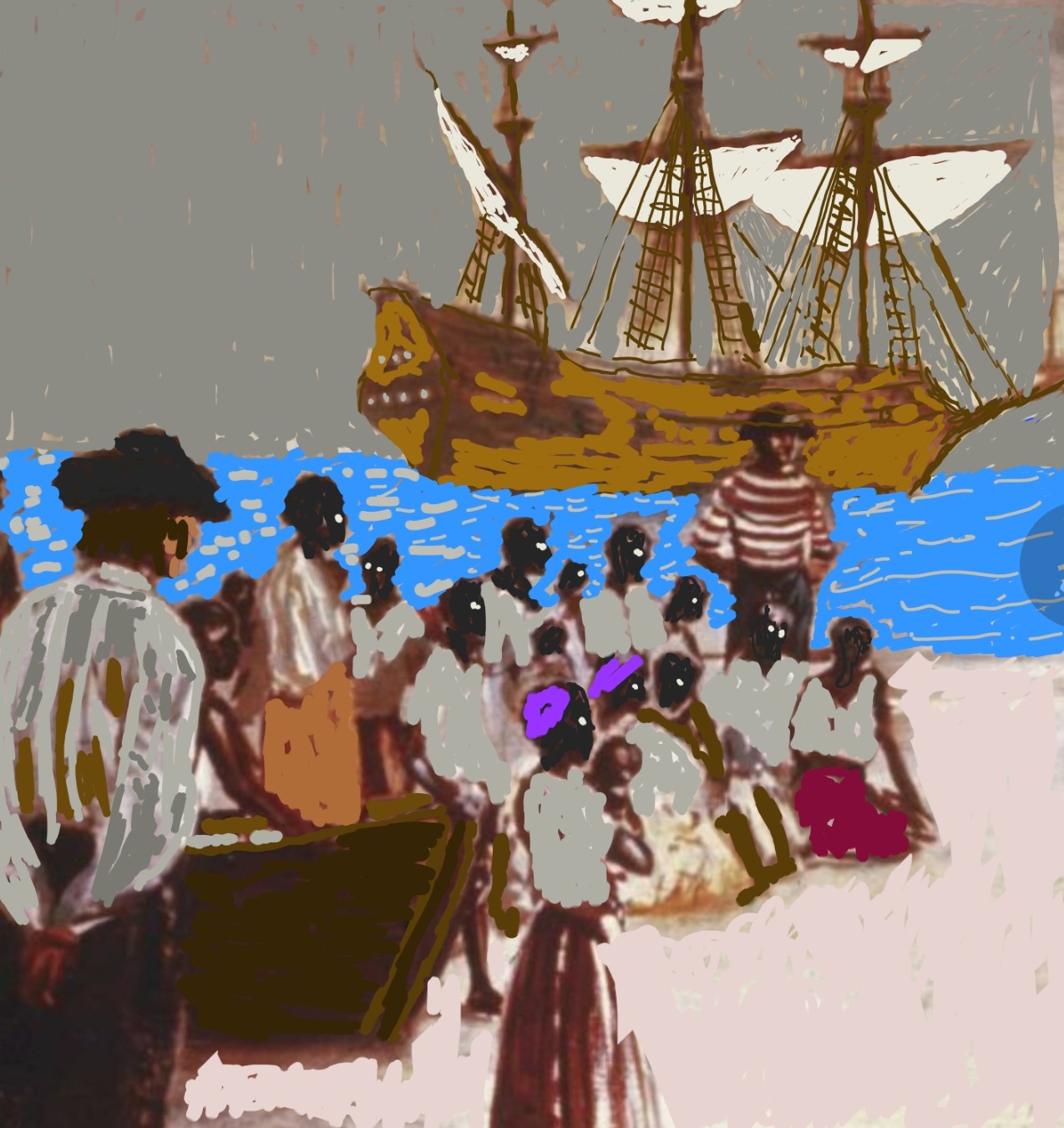
Big money journalism, owned and operated by northeastern elitists, have always propagandized the slavery problem as being under seccessist states control decade after decade since the pursuit of blood money was conducted. That is, it was their fault, and the guilt is on them, meaning the secessionist states, divorcing the slave trading enabling states from complicity. The slave trade has always been painted under the light of a farmland cruelty towards others. However, history tells a different Story. A story of antebellum New York city, New York’s big money interest driving the trade, and the federal court house in the Southern District of New York aiding and abetting an inhuman cruelty. Similar to the drug trade, the southerners were consumers of the product not the producers. Whereas, the New York big money shipping interests were the sellers (pushers) of the product (the institution of slavery). The slave trading ships were built in New York City/ Boston and registered in New City. New York City was the epicenter of the world wide slave trade. They used shadow companies to disguise the ownership of the ships and financiers of the operations. They all wanted slave money, but no one wanted to get their hands dirty. The Portuguese company, whose main members were Portuguese ( Rio de Janeiro, Bazil was founded in 1565 by the Portuguese) and the Spanish company were conglomerates powered by South American slave interest headquartered in New York. It was the textile industry of New York that made the clothes the Slaves wore, they made the tools the slaves used, they made the horse buggies used to haul the cotton. The fact is 40 cents of every dollar generated by the sale of cotton went to the City of New York, NY.
At the outbreak of succession the southern states were in debt to the New York industry on the order of 480 million dollars in accounts receivables, which in today's terms would be about 19 billion dollars. As you can see, that is a lot of money, and the New Confederacy had declared the debt owed as
However, when South Carolina Confederates fired on Fort Sumter, a custom collection depot, in the Charleston, South Carolina harbor, to remove the union blockade on April 13, 1861, the City of NY,NY realized the debt was not going to be paid, and got onboard with President Lincoln’s prosecution of tax collection and now unlawful debt collection. Thus, sealing the fate of Nathanial Gordon, a man arrested on the high seas for Piracy in accordance with the Piracy Act of 1820.
United States vs Nathanial Gordon
The court convened on June 18th,1861 for the first trial. Nathanial Gordon was represented by Phillip J Joachimson, a jewish man and former prosecutor, who turned defense counsel, most likely to capitalize on the lucrative defense litigation of Slave Traders. After all, for 40 years after the Piracy Act of 1820 had been enacted, no slave ship captured by the US Navy and brought to New York or elsewhere had ever been convicted. They would lock horns with a young Republican prosecutor named E Delafield Smith. E DelaField Smith, was a staunch Republican, and Chair of the New York Republican party , who had just replaced former Federal attorney James Roosevelt, a Democrat. He was a personal friend of William H Steward, the new United States Secretary of State under the newly elected Lincoln administration. Understand, Lincoln was chief counsel for the Illinois Central railroad located near the Chicago, Illinois area. During the 1800’s the railroad industry was equivalent to the big tech giants of today, and Abraham Lincoln was a kingpin in the railroad industry. Prior to the Railroad, ships were the primary mode in which cargo would travel. The age of the big sail clipper ships would soon be over. Slavery was an impediment to railroad expansion. Nathanial Gordon stood a chance as with all Slave traders, who had stood before the federal Judge in the federal court of the Southern District of New York, before Nathaniel Gordon was captured. The federal court of the Southern District of New York was a revolving door of catch and release with regard to slave traders, and had no respect for the Piracy Act of 1820. Matter of fact, many newspapers of the time referred to the Federal court of the Southern District of New York as the
Many of the Federal/State Judges and prosecutors would leave public service and place their license with the powerful Wall Street firm of Beebe, Dean, and Donahoe which was a partnership formed by former Federal/State Judges. Beebe, Dean, and Donahow specialized in defense and promotion of the Slave Trade. Basically, the Federal court of the Southern District of New York was running the entire slave apparatus in the United States through a powerful Wall Street proxy. A law firm known as Beebe, Dean, and Donahue.
The first trial of Mr. Gordon resulted in a mistrial. The jury returned a 7 -5 verdict. During the trial the federal Judge allowed the jurors to move about as they pleased on various breaks throughout the trial.
The Federal prosecutor chose to retry the case again and still seek the death penalty which was unprecedented at the time. The civil war raged on.
The second trial began on July 2nd, 1861 in the federal court house of the Southern District of New York. However, the defense, with Phillip J Joachimson still in place as lead counsel, had retained the powerful Wall Street law firm of Beebe, Dean, and Donahoe on a pro bono basis. The theory suggests, that if Mr. Gordon was to hang for piracy, then the entire slave trading smuggling operations would suffer. Thus, it was in the best interest of the entire industry that Mr. Gordon did not hang for piracy. Gilbert Dean would be the principal to represent Mr. Gordon. Mr. Dean, who was a former Supreme Court Justice of New York at age 30, first order of business was to delay the trial. The Judge denied the motion. However, days later the prosecution requested a delay and the federal Judge granted the motion. Both sides needed the extra time for additional witnesses. The trial began on November 6, 1861. During this long delay the Confederacy had won unexpected major victories. Thus, it was now apparent the war would drag on for a long, long, time. The prosecution had to prove Mr. Gordon was an american citizen, that Mr. Gordon was on an american registered vessel, and that Mr. Gordon was not in the jurisdiction of another country. Nathanial Gordon's father was a ship captain, and had also been captured trading in slaves. However, Nathanial’s father was never hung for the practice. The defense claimed the accused was born at sea. Thus complicating Mr. Gordon's actual citizenship. It didn’t fly with the jury nor the Judge. He was born and raised in Portland, Maine, and his wife and children lived in Portland, Maine. It was common practice for smugglers, blackbirders as they were called, to onboard a dummy crew of Spanish or Portuguese sailors in the Congo river, Africa. When detained, the Captain would claim he was a passenger, and one of the onboarded portuguese sailors was now acting as master of the vessel. That is, the ship had been sold to someone else while in Portuguese waters. However, there were no papers to document the sale even though disputed testimony claimed one of the Portuguese imposters was acting as captain. Thus, the
Abraham Lincoln understood the issues just as his former countrymen Jefferson Davis understood the issue. Jefferson Davis writes in the “Rise and Fall of the Confederate Government '' that all states in the secession movement had outlawed the importation of slaves by 1848. Thus, we see the states were doing their best to stop the trade, but the smugglers keep offloading African slaves. The slave trading industry of New York and Boston had altered the demographics of the country and pushed the institution of slavery not just in the United States but also the Americas as a whole to the point of no return forcing the secessionist states who had been instrumental in drafting the Piracy Act of 1820 into division. If the federal judges of the Southern District of New York and elsewhere were not going to enforce the law, what other options did the secessionist states have? Almost the entire aristocracy of New York partitioned President Lincoln for a pardon, That is correct, Wall Street lawyers, Federal and State Justices and Judges, Banking CEOs all interfaced with the president begging him for a pardon. In the 1800’s these were people who had enriched themselves greatly in the slave trade. In fact, Yale university is named after a notorious slave trader named Elihu Yale who made a fortune in the slave trade. President Lincoln did not yield. Nathanial Gordon was executed on 21 February 1862, just one day after President Lincon’s son “William Walace Lincoln '' died from Typhoid. A heavy burden indeed.
1820 Piracy Act Section 4 And be it further enacted, That if any citizen of the United States, being of the crew or ship's company of any foreign ship or vessel engaged in the slave trade, or any person whatever, being of the crew or ship's company of any ship or ship's company of any ship or vessel, owned in the whole part, or navigated for, or in behalf of, any citizen or citizens of the United States, shall land, from any such ship or vessel, and on any foreign shore, seize any negro or mulatto, not held to service or labour by the laws of either of the states or territories of the United States, with in tent to make such negro or mulatto a slave, or shall decoy, or forcibly bring or carry, or shall receive, such negro or mulatto on board any such ship or vessel, with intent as aforesaid, such citizen or person shall be adjudged a pirate; and on conviction thereof before the circuit court of the United States for the district wherein he may be brought or found, shall suffer death.
Thus, the United States would longer tolerate the trafficking of slaves anywhere in the world by any US citizen or US registered vessel.
Under this 1820 Piracy Act Nathanial Gordon from Portsmouth, Maine a slave trading ship Captain of the New York registered ship the
Eriewould be the
onlyslave trading ship captain to be executed by the United States government in 1862 some 40 years after the act was put into law.
Big money journalism, owned and operated by northeastern elitists, have always propagandized the slavery problem as being under seccessist states control decade after decade since the pursuit of blood money was conducted. That is, it was their fault, and the guilt is on them, meaning the secessionist states, divorcing the slave trading enabling states from complicity. The slave trade has always been painted under the light of a farmland cruelty towards others. However, history tells a different Story. A story of antebellum New York city, New York’s big money interest driving the trade, and the federal court house in the Southern District of New York aiding and abetting an inhuman cruelty. Similar to the drug trade, the southerners were consumers of the product not the producers. Whereas, the New York big money shipping interests were the sellers (pushers) of the product (the institution of slavery). The slave trading ships were built in New York City/ Boston and registered in New City. New York City was the epicenter of the world wide slave trade. They used shadow companies to disguise the ownership of the ships and financiers of the operations. They all wanted slave money, but no one wanted to get their hands dirty. The Portuguese company, whose main members were Portuguese ( Rio de Janeiro, Bazil was founded in 1565 by the Portuguese) and the Spanish company were conglomerates powered by South American slave interest headquartered in New York. It was the textile industry of New York that made the clothes the Slaves wore, they made the tools the slaves used, they made the horse buggies used to haul the cotton. The fact is 40 cents of every dollar generated by the sale of cotton went to the City of New York, NY.
Hanging Captain Gordon: The Life and Trial of an American Slave Trader
Ron Soodalter
ISBN-13 : 978-0743267281
null and void. Not only were the debts null and void, Jefferson Davis stated he was going to confiscate all northern property according to the New York Harold. Initially the New Yorkers wanted their money back so they partitioned Abraham Lincoln on the matter. Informing President Lincoln that antebellum New York was allying with the secessionist states. The mayor of New York City (Democrat) wanted to change the name of New York City to “Free City of Tri-insula”, and secede from the Union.
Hanging Captain Gordon: The Life and Trial of an American Slave Trader
Ron Soodalter
ISBN-13 : 978-0743267281
United States vs Nathanial Gordon
The court convened on June 18th,1861 for the first trial. Nathanial Gordon was represented by Phillip J Joachimson, a jewish man and former prosecutor, who turned defense counsel, most likely to capitalize on the lucrative defense litigation of Slave Traders. After all, for 40 years after the Piracy Act of 1820 had been enacted, no slave ship captured by the US Navy and brought to New York or elsewhere had ever been convicted. They would lock horns with a young Republican prosecutor named E Delafield Smith. E DelaField Smith, was a staunch Republican, and Chair of the New York Republican party , who had just replaced former Federal attorney James Roosevelt, a Democrat. He was a personal friend of William H Steward, the new United States Secretary of State under the newly elected Lincoln administration. Understand, Lincoln was chief counsel for the Illinois Central railroad located near the Chicago, Illinois area. During the 1800’s the railroad industry was equivalent to the big tech giants of today, and Abraham Lincoln was a kingpin in the railroad industry. Prior to the Railroad, ships were the primary mode in which cargo would travel. The age of the big sail clipper ships would soon be over. Slavery was an impediment to railroad expansion. Nathanial Gordon stood a chance as with all Slave traders, who had stood before the federal Judge in the federal court of the Southern District of New York, before Nathaniel Gordon was captured. The federal court of the Southern District of New York was a revolving door of catch and release with regard to slave traders, and had no respect for the Piracy Act of 1820. Matter of fact, many newspapers of the time referred to the Federal court of the Southern District of New York as the
pimps of piracy.
Hanging Captain Gordon: The Life and Trial of an American Slave Trader
Ron Soodalter
ISBN-13 : 978-0743267281
Hanging Captain Gordon: The Life and Trial of an American Slave Trader
Ron Soodalter
Chapter 6
ISBN-13 : 978-0743267281
The second trial began on July 2nd, 1861 in the federal court house of the Southern District of New York. However, the defense, with Phillip J Joachimson still in place as lead counsel, had retained the powerful Wall Street law firm of Beebe, Dean, and Donahoe on a pro bono basis. The theory suggests, that if Mr. Gordon was to hang for piracy, then the entire slave trading smuggling operations would suffer. Thus, it was in the best interest of the entire industry that Mr. Gordon did not hang for piracy. Gilbert Dean would be the principal to represent Mr. Gordon. Mr. Dean, who was a former Supreme Court Justice of New York at age 30, first order of business was to delay the trial. The Judge denied the motion. However, days later the prosecution requested a delay and the federal Judge granted the motion. Both sides needed the extra time for additional witnesses. The trial began on November 6, 1861. During this long delay the Confederacy had won unexpected major victories. Thus, it was now apparent the war would drag on for a long, long, time. The prosecution had to prove Mr. Gordon was an american citizen, that Mr. Gordon was on an american registered vessel, and that Mr. Gordon was not in the jurisdiction of another country. Nathanial Gordon's father was a ship captain, and had also been captured trading in slaves. However, Nathanial’s father was never hung for the practice. The defense claimed the accused was born at sea. Thus complicating Mr. Gordon's actual citizenship. It didn’t fly with the jury nor the Judge. He was born and raised in Portland, Maine, and his wife and children lived in Portland, Maine. It was common practice for smugglers, blackbirders as they were called, to onboard a dummy crew of Spanish or Portuguese sailors in the Congo river, Africa. When detained, the Captain would claim he was a passenger, and one of the onboarded portuguese sailors was now acting as master of the vessel. That is, the ship had been sold to someone else while in Portuguese waters. However, there were no papers to document the sale even though disputed testimony claimed one of the Portuguese imposters was acting as captain. Thus, the
Eirewas an American registered vessel. This was not Nathanial Gordon’s first slave trading expedition. He was a well seasoned slave trading captain. On this trip, he personally loaded 897 negros (a cargo worth 44 million dollars today) in the hole of the ship in three quarters of a hour at the mouth of the Congo river. Thus, he was not in the territory of the Portuguese African colony. Men, Women, and children all stripped naked and made to sit down. They would remain in that position for the next month during the voyage across the atlantic. On average 17.5 percent would die before reaching the destination. This trip was destined for Havanna, Cuba. At this time, Cuba was a main destination for slaves who were needed for the sugar cane fields. The USS Mohican had detained the
Eriecaptained by Nathanial Gordon 50 miles at sea and discovered the cargo. Thus, Captain Nathanial Gordon was not in the territorial waters of another country. Mr. Gordon had hoisted the American flag marking his vessel as an American ship. Mr. Gordon and crew were arrested and the Erie was sailed to Monrovia, Liberia which was now an American colony for the very purpose of off loading slaves from captured slave ships. After all the slaves were offloaded the Erie was sailed to New York Harbor and libeled. This was standard practice. Mr. Gordon and the crew were handed over to the US Marshals. This time the federal judge sequestered the jury under armed guard. Whether they were influenced by government agents is unknown. However, there can be no doubt it impressed upon the jurors the gravity of the situation, 19 billion dollars of debt was on the line. The Jury found Mr. Nathanial Gordon guilty of Piracy, and the federal judge sentenced Nathanial Gordon to death by hanging. Nathanial Gordon was not the first Captain or crew member to have been detained and stand trial in the federal courthouse in the Southern District of New York. In the preceding forty years many, many others had committed the same crime but were released, with a wink and nod, from the federal Judge, on a
technicality, and the most heinous crime the United States of America has ever known was allowed to continue for 40 years. It was a total and complete disregard for the law, by the very powers entrusted to uphold the law.
Abraham Lincoln understood the issues just as his former countrymen Jefferson Davis understood the issue. Jefferson Davis writes in the “Rise and Fall of the Confederate Government '' that all states in the secession movement had outlawed the importation of slaves by 1848. Thus, we see the states were doing their best to stop the trade, but the smugglers keep offloading African slaves. The slave trading industry of New York and Boston had altered the demographics of the country and pushed the institution of slavery not just in the United States but also the Americas as a whole to the point of no return forcing the secessionist states who had been instrumental in drafting the Piracy Act of 1820 into division. If the federal judges of the Southern District of New York and elsewhere were not going to enforce the law, what other options did the secessionist states have? Almost the entire aristocracy of New York partitioned President Lincoln for a pardon, That is correct, Wall Street lawyers, Federal and State Justices and Judges, Banking CEOs all interfaced with the president begging him for a pardon. In the 1800’s these were people who had enriched themselves greatly in the slave trade. In fact, Yale university is named after a notorious slave trader named Elihu Yale who made a fortune in the slave trade. President Lincoln did not yield. Nathanial Gordon was executed on 21 February 1862, just one day after President Lincon’s son “William Walace Lincoln '' died from Typhoid. A heavy burden indeed.